Tuesday, October 18, 2011

One Great . . . Cookbook giveaway


Fans of roasted cauliflower, here's a new way to use it: Toss it with herbs, olives and capers to make a salad. We got the recipe from the new cookbook-with-attitude, "Party Like a Culinista," by Jill Donenfeld and Josetth Gordon (Lake Isle Press, $21.95).

Donenfeld and Gordon are caterers and party experts who are into easy entertaining with whole foods and simple recipes.

Want to win a copy of the book? Email me your name with "Culinista" in the subject line. We'll pick a winner by random drawing and post it here. Deadline: 9 a.m. Friday.

Party on, kids.

Roasted Cauliflower Salad

From “Party Like a Culinista,” by Jill Donenfeld and Josetth Gordon (Lake Isle Press, $21.95).

2 heads cauliflower, chopped into florets

3 tablespoons extra virgin olive oil

1/2 teaspoon fine-grain sea salt

3/4 cup crushed walnuts

1/2 cup chpped flat-leaf parsley

1/2 cup chopped fresh cilantro

1/4 cup chopped fresh mint

2 tablespopons chopped fresh oregano

3/4 cup pitted kalamata olives

2 tablespoons juice from the olive jar

2 tablespoons capers packed in brine, crushed

2 teaspoons caper brine

2 tablespoons fresh lemon juice (about 1 lemon)

2 teaspoons grated lemon zest

1/2 teaspoon freshly ground black pepper

PREHEAT oven to 375 degrees. Toss the cauliflower with the olive oil and salt. Spread on a rimmed baking sheet and roast 20 to 30 minutes or until the edges of the cauliflower are starting to brown. Cool.

SPREAD the walnuts on a rimmed baking sheet and toast in the oven until browned and fragrant, about 10 minutes. Cool.

Toss together the cauliflower, nuts, herbs and olives in a large bowl. Blend the olive juice, capers, caper brine, lemon juice, zest and pepper in a small bowl. Drizzle over the cauliflower and toss again. Serve cold or at room temperature.

Who's leading American food?

Put aside the news about food-safety outbreaks and obesity numbers for a minute and think about something positive: The people doing incredible work to improve sustainability and fairness in America's food policy.

I got to play a small part in that last week. Two years ago, I was stepping down after 10 years on the committee that oversees the James Beard Foundation's book awards. I was literally at my last meeting in New York when the committee that oversees all of the foundation's awards started talking seriously about finding a way to honor American food beyond the glitz and glamour of the yearly restaurant and chef awards.

The foundation was starting a yearly conference that would bring together the best minds to highlight great work being done. In addition, the foundation wanted to include some kind of an award. What kind, they didn't know. They just knew there was a lot of important work being done in areas of food availability, sustainable agriculture and food policy.

That's where I came in: Since I knew how to write bylaws and set up committee procedures from my work with the book awards, the foundation asked if I would stay on as a volunteer to figure out how to make a new set of awards. We wanted to honor a long list of criteria, everything from hunger relief to school gardens.

The result was the James Beard Foundation Leadership Awards: A list of honorees who will be named every year for the work they're doing right now. The first honorees were named last week in New York, at the second JBF Food Conference: Sustainability on the Table.

As a journalist, I can't vote on things that I might need to cover. So the Leadership Awards were arranged so I don't have to: We have a prestigious advisory committee that picks the nominees and votes.

The initial advisory committee: chefs Dan Barber and Rick Bayless, Scott Cullen of the GRACE Communication Foundation, Hal Hamilton of the Sustainable Food Lab, culinary historian Jessica Harris, Robert Lawrence of the Center for a Livable Future at Johns Hopkins, nutrition and public health professor Marion Nestle, Eric Rimm of Harvard, Gus Schumacher of the Wholesome Wave Foundation, Debbie Shore of Share Our Strength, Naomi Starkman of Civil Eats, and Arlin Wasserman of Sodexo.

My role is gatekeeper -- I make the train run on time. I helped to write the award definition and criteria, ran the conference calls and set up the schedule. But the work that was honored last week is so important, I'm proud to play even that small role.

Here are the first honorees, and a little about them. Yes, there are some names on this list you may not expect, like Unilever and Costco. But it takes all kinds of work to make a sustainable food supply. It's not all Saturday morning farmers markets, folks:

Will Allen, (below) founder of Rainbow Farmer's Cooperative, the last remaining farm within the Milwaukee city limits, and founder of Growing Power, a 2-acre urban agriculture model that works with children and adults to grow food in inner cities.

Fedele Bauccio, Bon Appetit Management Company, an innovative food-service company that pioneers things like a Low Carbon Diet program. Bon Appetit also works with the United Farm Workers and Oxfam to support social-justice in the harvesting of food.

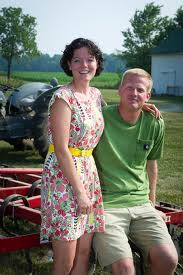
Debra Eschmeyer, (left, with her husband Jeff) co-founder of Food Corps, which works with AmeriCorps to match young adults with school-based food organizations in high-obesity, low-resource communities.

Sheri Flies, assistant general merchandise manager for Costco. Yes, Costco: Flies oversees the sourcing of limited-resource commodities for the Kirkland Signature label, making sure the products are environmentally sustainable and making sure workers get fair treatment and health care.

Jan Kees Vis, global director of sustainable sourcing for Unilever. A big company like Unilever makes a lot of products that use palm oil. Vis changed the way palm oil is grown and harvested to make it sustainable.

Fred Kirschenmann, Leopold Center for Sustainable Agriculture at Iowa State University of president of the board of the Stone Barns Center for Food and Agriculture. Fred has a farming background and a visionary's imagination.

Michelle Obama, for her work on childhood obesity and the Let's Move campaign. The first lady doesn't officially accept awards, but the White House sent advisor Sam Kass in her place.

Janet Poppendieck, sociology professor at Hunter College and author of "Sweet Charity," an examination of food relief programs, and "Free for All: Fixing School Food in America."

Alice Waters, for her advocacy of sustainable agriculture and her work with the Edible Schoolyard program.

Craig Watson, vice president of Agriculture Sustainability for food-service giant Sysco Corp. Sysco's Integrated Pest Management program includes 921,000 acres and 30 local food programs.

You can find more on the Leadership Awards, including video from the conference sessions, at www.jamesbeard.org.

Monday, October 17, 2011

Chew Over: What does "ethnic" food mean?

Is it a harmless euphemism for "foreign," or a more loaded word that means "suspicious?" A debate broke out at the London Restaurant Festival over the use of the term "ethnic food."

British food critic A. A. Gill called it "a pejorative, judgmental and unnecessary term invented by the French to describe food in the Michelin Guide that isn't French or Italian." Comedian Hardeep Singh Kohli countered, "Food defines who we are. People from different parts of the world eat differently—that's hardly headline news."

So is the term "ethnic food" insulting? And if it is, is there a better phrase to use to mean "food from other places"? Here's Bruce Palling's description of the debate in the Wall Street Journal.

Tuesday, October 4, 2011

Almost the best food picture ever


Last week, I posted that great naked chicken picture from The New York Times. So how do I follow that act? Meet Ellie Mae.

I'll be on the road for the next week and half, first at the Association of Food Journalists conference in Charleston, then on vacation in Charlotte and New York. I'll be sort of in touch and generally checking e-mail. And I'll be active on Twitter, @kathleenpurvis.

Before I left, I wanted to leave you with something. So I'm leaving you with Ellie Mae. When photographer and photo editor Wendy Yang was shooting the pictures for Wednesday's story on bologna, she took a stack of mortadella home to work on it. She was shooting a detail when Ellie Mae got into the act. Yang actually has three dogs, but only Ellie managed to reach the food.

No, we couldn't run that picture in the Food section -- some people get all squeamish about the idea of food and dogs. But it was such a cute shot, I couldn't resist sharing it for dog lovers everywhere.

See you soon, and remember: Ellie Mae says, "Wag more. Bark less."

One Great . . . Cookie Book


If you saw my column a couple of months ago on Gretchen Holt-Witt and Cookies For Kids' Cancer, you know Charlotte is a big player in the group. We give better bake sales than just about any place to raise money for pediatric cancer research.

Now Holt-Witt's cookie cookbook is out, with all author proceeds going to the group. It's a sweet book and a sweet story, and yes, there are Charlotte people pictured in there. Holt-Witt, whose son Liam died last year, is working on arranging a book-signing here. But in the meantime, "Cookies For Kids' Cancer Best Bake Sale Cookbook" is $19.99 from Wiley and has 70 recipes for bake-sale worthy cookies, brownies, cupcakes, scones and candies.

Dried Cranberry and Chocolate Cookies From "Cookies For Kids' Cancer Best Bake Sale Cookbook," by Gretchen Holt-Witt (Wiley, $19.99).

2 1/2 sticks (10 ounces) unsalted butter, room temperature
1 cup light brown sugar
1/2 cup granulated sugar
1 large egg, room temperature
1 large egg yolk, room temperature
1 tablespoon vanilla
2 cups all-purpose flour
1 cup quick-cooking or old-fashioned rolled oats
1 teaspoon baking powder
1 teaspoon baking soda
1 teaspoon kosher salt
1 1/2 cups chocolate chips, either semisweet or white chocolate
1 1/2 cups dried cranberries

PREHEAT oven to 325 degrees. Line a cookie sheet with parchment paper.

PLACE the butter and sugars in the bowl of a mixer fitted with a paddle and beat until smooth and creamy. Add the egg, egg yolk and vanilla, one at a time, beating well between additions. Scrape down the sides of the bowl. Place the flour oats, baking powder, baking soda and sal tin a separate bowl and mix well. Add to the butter mixture and beat until everything is well-incorporated. Scrape down the sides of the bowl, add the chocolate chips and cranberries and beat again.

DROP the dough by heaping teaspoons about 2 inches apeart on the prepared cookie sheet. Transfer to the oven and bake until the cookies begin to brown at the edges, 12 to 15 minutes. Cool on the cookie sheet. Transfer to a wire rack and repeat with remaining ingredients.

Makes 3 to 4 dozen cookies.

Monday, October 3, 2011

Is this the origin of Red Velvet Cake?


Maybe it's not as big a mystery as the location of the Grail or what happens when you dial an 800 number, but the Origin of the Red Velvet Cake has raged among culinary history buffs for years.

Despite Southern affinity for Red Velvet Cake, there has never been compelling evidence that the cake's origins are Southern. Most sources trace it back to the Waldorf Astoria Cake, which was the urban-legend forerunner to the Neiman-Marcus Cookie.

Now food writer and baker Stella Parks has an article on Gilt Taste, Ruth Reichl's new food writing/food buying hybrid site, that traces Red Velvet history farther back. It's a shame that Parks apparently hates Red Velvet so much, and I wish she had included a little more on the source of her 1910 copy of The Oxford-University Methodist Church Community Cookbook (is that Oxford, Miss.?) and more on the provenance of Alvin Wood Chase's receipt book from 1873.

Still, it's interesting history on the terms "velvet" and "red" as they pertain to cake baking.

On Tuesday, Parks and Gilt Taste promise to continue the tale with a Red Velvet recipe. Happy reading. Here's the link to Parks' article: redvelvetcake.

Photo: thebeautybridal.com.

One Great Chicken Dish


A little spicy, a little sweet. These made a simple early-fall Sunday supper, with grits and a Waldorf salad with apples and pears.

The original recipe called for skinless, boneless chicken thighs. And you can certainly go that way. But whole chicken thighs taste so much better.

Spicy Honey-Brushed Chicken Thighs
Adapted from Cooking Light, September 2010 issue

2 teaspoons garlic powder
2 teaspoons chili powder
1 teaspoon salt
1 teaspoon ground cumin
1 teaspoon paprika
1/2 teaspoon cayenne pepper
8 chicken thighs (see note)
Cooking spray
6 tablespoons honey
2 teaspoons cider vinegar

Preheat the broiler. (To really get a burst of heat in an electric oven, I usually preheat the oven to 500 degrees, then switch to the broiler setting when the food is ready to go in.)

Combine the garlic powder, chili powder, salt, cumin, paprika and red pepper in a large bowl. Add the chicken and toss to coat well. Spray a broiler pan with cooking spray. Place the chicken in the pan skin-down. Broil 6 to 7 minutes. Turn with tongs and broil 6 to 7 minutes longer.

Combine honey and vinegar in a small bowl while thighs are broiling. Remove chicken from oven and turn chicken skin-down. Brush with about half the honey mixture. Return to oven and broil 2 minutes. Remove chicken from oven, turn pieces skin up and brush with the remaining honey mixture. Return to oven and broil 1 to 2 minutes, until browned but not burned.

Yield: 4 servings.

NOTE: If you use skinless, boneless chicken thighs, broil 5 minutes per side and 1 minute per side after brushing with honey glaze.